




Emotional Intelligence as a Key Competence in AI-Driven Work Environments
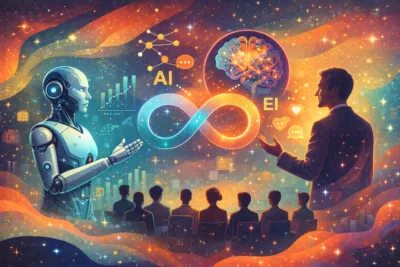
Artificial intelligence increasingly shapes how work is organized, coordinated, and evaluated.
As algorithmic systems become embedded in everyday organizational processes, attention is shifting from technical adoption toward the human and relational dimensions of AI transformation.
Recent analyses of work redesign in AI-supported environments highlight the growing importance of emotional intelligence (EI) – particularly competencies related to cooperation, leadership, and interpersonal coordination.
Conceptual insights discussed by Daniel Goleman indicate that competencies such as influence, inspiration, coaching, teamwork, and conflict management play a central role in supporting adaptation to AI-mediated work. These competencies enable employees and leaders to navigate uncertainty, align technological change with organizational goals, and sustain trust during periods of transformation.
Evidence summarized in reports by McKinsey further suggests that while AI can automate a substantial share of work activities, competencies grounded in social and emotional intelligence remain critical and resistant to automation.
From the perspective of the People and Algorithms in Organisations (DIGIT_People and algorithms) project, these observations underline a broader conclusion: AI implementation is not only a technological challenge, but also a competence-based and organizational one.
Developing emotional intelligence alongside digital and analytical skills supports responsible human–AI collaboration, enhances team cohesion, and contributes to more sustainable organizational change.
Source:
Goleman, D. (2025). The AI meets EI: Conversation Continues. LinkedIn Pulse.
This post is part of the project “People and Algorithms in Organisations: Competences to Work in the Digital Environment” (DIGIT_People and algorithms), funded by the NAWA – Narodowa Agencja Wymiany Akademickiej (Polish National Agency for Academic Exchange).