

Endowment
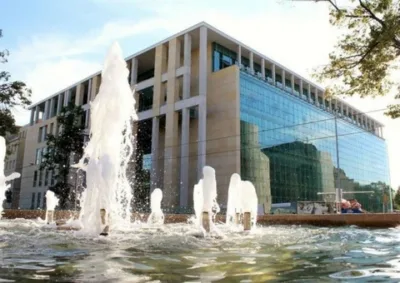
Poznań University of Economics and Business is the first public university in Poland to establish an endowment.
An endowment is a dedicated, permanent fund designed to provide long-term support for research and teaching. Contributions to the endowment are preserved in perpetuity rather than spent. The funds are invested prudently, and only the returns generated are used to support the University’s most important activities.
In this way, every contribution continues to serve society for generations, providing a stable source of support regardless of short-term financial circumstances.
The PUEB Endowment has been established with future generations of students, scholars, and members of the wider academic community in mind. Long embraced by the world’s leading universities, this model represents a strategic step towards strengthening the financial independence of our alma mater.
In practical terms, a gift made today will have an enduring impact-advancing research, education, and innovation at PUEB for decades to come.
-
Benefactors

SGB-Bank is the central affiliating bank for 174 SGB Cooperative Banks—institutions committed to serving their local communities and investing in their future.
Across the SGB Group, our customers’ money is invested locally, supporting the development of the places in which they live and work. Our approach is founded on reciprocity: the value we create is returned to the communities we serve. We also remain close to our customers through our mobile banking application and a comprehensive suite of mobile payment solutions.
SGB Cooperative Banks have long maintained strong ties with local communities. We seek to make a meaningful contribution not only at the local level, but also to issues of wider social importance.
Research grants, collaboration with students, academic research, and innovative projects undertaken by Poznań University of Economics and Business can make a significant contribution to the advancement of Polish science—from major initiatives involving the development of artificial intelligence to the everyday promotion of economic and financial literacy. SGB-Bank can play a tangible role in supporting this progress.
It is also significant that both institutions have their roots in Poznań.
“We are proud to be the first company to contribute to the Poznań University of Economics and Business Endowment,” says Mirosław Skiba, President of the Management Board of SGB-Bank.
“Both of our institutions are based in Poznań, yet their influence extends throughout Poland. For many years, SGB-Bank has worked closely with SGB Cooperative Banks, supporting local communities and the development of entrepreneurship, while PUEB has made an important contribution to academic research and the growth of Polish business.
“Our partnership is about more than business. It will have a tangible impact on future research projects with the potential to improve the quality of life in Poland and accelerate the development of our economy.”
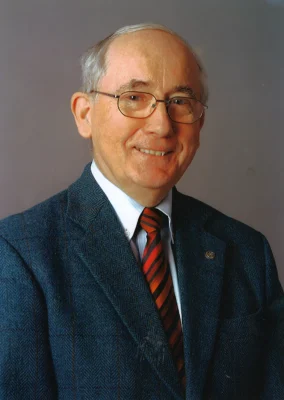
Professor Romuald Zalewski was born on 10 August 1941 in Inowrocław.
He devoted his entire professional and academic career to the Poznań University of Economics and Business. He is a distinguished representative of the Poznań academic community specialising in commodity science, commodity chemistry, product quality, and quality management.
He graduated from Adam Mickiewicz University in Poznań in 1963 with a Master’s degree. He received his doctoral degree from the same university in 1967 and his postdoctoral degree (habilitation) in 1974.
From 1963 onwards, he was professionally associated with the Poznań University of Economics (now the Poznań University of Economics and Business – PUEB), where he progressed through all stages of an academic career – from Assistant Professor, through Associate Professor, to Full Professor. He was awarded the title of Professor in 1986. For many years, his academic and organisational activities played an important role in the development of the Poznań school of commodity science.
Professor Romuald Zalewski held numerous positions of great responsibility at our University.
From 1975 to 1977, he served as Vice-Dean of the Faculty of Trade and Commodity Science. From 1984 to 1990, he was Director of the Institute of Commodity Science, and from 1990 to 1996 he served as Vice-Rector of the then Poznań University of Economics. After completing his term as Vice-Rector, he served as Dean of the Faculty of Commodity Science from 1996 to 1999. He also headed the doctoral programme and for many years served as Chairman of the Committee on Commodity Sciences of the Polish Academy of Sciences, Poznań Branch. He is also an Honorary Professor of the University of Warmia and Mazury in Olsztyn.
Professor Zalewski’s academic achievements focus primarily on commodity science, product quality, analytical chemistry, quality assessment, and quality management, with particular emphasis on food products. An important aspect of his work has been the integration of scientific and technological research with economic issues and the needs of businesses.
A significant part of his research has focused on product quality and assessment as well as consumer behaviour. He has collaborated, among other areas, on research into consumer and sensory evaluation of new food products. His more recent publications address the circular economy, responsible consumer behaviour, sustainable food systems, and energy security. In 2023, together with Professor E. Skawińska, he published the article “New Foods as a Factor in Enhancing Energy Security” in the journal Energies. Previously, the co-authors had analysed, among other issues, the relationship between the Water–Energy–Food nexus and food loss and waste.
Professor Zalewski has authored or co-authored more than 300 publications and 13 books.
In recognition of his contributions and achievements, he has received numerous honours and distinctions, including the Knight’s Cross and Officer’s Cross, as well as the Medal of the Commission of National Education.
Professor Zalewski has remained an active member of the academic community even after his retirement. His knowledge and experience continue to contribute to academic and expert activities in the fields of quality and commodity science.
Professor Romuald Zalewski is among the scholars who, over several decades, have helped build the achievements and reputation of the Poznań school of commodity science. His research, teaching, and organisational activities have contributed to the advancement of quality research, the education of successive generations of specialists, and the strengthening of the position of the Poznań University of Economics and Business as an important centre for research into commodity science and quality.
His achievements remain an important part of the history and tradition of the Poznań University of Economics and Business, while his many years of academic activity exemplify the consistent integration of research, teaching, organisational work, and cooperation with the business community. This is also reflected in his role as Chairman of the Jury of the Poznań International Fair Gold Medal competition and as a member of the Committee of the Wielkopolska Quality Award.
He further developed his teaching experience during four years as a lecturer at the University of Sulaymaniyah. He was also a visiting professor at universities in, among others, Bradford, Nottingham, Lund, Lisbon, Lyon, Paris, Saarbrücken, Stuttgart, Marburg, Leipzig, Trieste, Louvain-la-Neuve, Wageningen, Tallinn, Taipei, and Atlanta.
Professor Eulalia Skawińska, born in 1943, is a distinguished Polish economist, researcher, and academic teacher whose scholarly achievements encompass a broad range of issues in economics, management, enterprise competitiveness, regional development, innovation, European integration, and sustainable development.
Her academic career has been marked by remarkable continuity and an evolution of research interests – from the food economy and agricultural cooperatives, through rural development and European integration, enterprise competitiveness and regional development, to contemporary issues of innovation, the circular economy, food security, and the interrelationships between water, energy, and food.
During the first stage of her academic career, in the 1970s and 1980s, Professor Skawińska focused on the management of the food economy, with particular emphasis on agricultural cooperatives. In the 1990s, her interests shifted towards regional policy and the development of the food sector and rural areas, with particular attention to European integration processes. She conducted research on European regional policy and cooperatives, including dairy cooperatives. She also addressed the delimitation of agricultural and rural problem areas and the instruments supporting their development.
Another important stage of her academic work coincided with Poland’s economic transformation and preparations for accession to the European Union. During this period, Professor Skawińska analysed European integration processes, enterprise competitiveness, and the barriers faced by the Polish economy and food sector in adapting to new economic and institutional conditions.
Cooperation with the business community has also constituted an important part of her professional activity. She served as a member and chair of the supervisory boards of State Treasury companies and prepared expert reports for public institutions and businesses. Among these projects was an expert report commissioned by the Sejm of the Republic of Poland concerning the rationale and appropriate form for establishing the National Sugar Company “Cukier Polski”.
Professor Skawińska also developed, among other concepts, a model for the development of innovation activity among Polish enterprises, a quadruple helix model incorporating the Consumer 4.0, and a spiral model for increasing enterprise innovation. She is also a co-creator of a holistic model for the development of intellectual capital in enterprises.
An important achievement of her research was the development of a methodology for diagnosing the social capital gap and conducting multidimensional analysis of social capital, known as the MAKS method. Professor Skawińska has also investigated the importance of formal and informal relationships, inter-organisational cooperation, and business networks in enhancing enterprise efficiency, innovation, and competitiveness.
Her research also addresses the circular economy as a model of lasting and sustainable development, with particular emphasis on reducing resource losses and waste, including food waste. One of the outcomes of this research is her ongoing development of the Water–Energy–Food nexus concept, linked to the issues of food security, food loss, and food waste.
Professor Eulalia Skawińska is also an experienced academic teacher. She has taught courses in economics, microeconomics, macroeconomics, international economics, international economic relations, European integration, enterprise competitiveness, and the economics of the European Union. She has also taught at doctoral and postgraduate levels.
Working with young researchers has played a particularly important role in her academic career. She has reviewed doctoral dissertations, served as an examiner in doctoral proceedings, conducted Master’s and doctoral seminars, and supported early-career researchers in preparing academic publications. She has also organised conferences and academic camps for students.
Professor Skawińska has been actively involved in the professional community of economists. From 2002, she served for two terms as Vice-Chair of the Board of the Poznań Regional Branch of the Polish Economic Society. She was also a member of the Programme Council for the Development Strategy of the Wielkopolska Region.
Professor Skawińska’s publication record includes numerous monographs, textbooks, chapters in edited volumes, and academic articles published both in Poland and in international journals. Her scholarly achievements also encompass research on foreign direct investment, enterprise innovation, social capital, regional competitiveness, and international economic relations.

Tomasz Jabłoński
Tomasz Jabłoński is the first individual benefactor of the PUEB Endowment.
A Poznań-based entrepreneur and investor, he has been closely involved in the technology and innovation sectors for many years. He is the founder and CEO of one of Poland’s largest mobile technology companies.
The projects developed under his leadership-including Blix, Zdrowe Zakupy, and Qpony-help consumers make more informed purchasing decisions. He also actively supports the development of early-stage companies as a mentor and angel investor.
His achievements have been recognised through numerous distinctions, including Forbes 30 Under 30, Forbes Diamonds, Business Gazelles, Diamonds of the Polish Economy, the Financial Times FT 1000, and the Deloitte Technology Fast 50, which recognises some of Europe’s fastest-growing technology companies.
Income generated by Mr Jabłoński’s contribution will support grants for applied research. The projects funded through this programme will address pressing, real-world challenges faced by business and society.

Michał Babicz, Attorney-at-Law
Michał Babicz has become the third partner of the PUEB Endowment.
He is an attorney-at-law, a partner at Filipiak Babicz Legal, and Head of the firm’s Dispute Resolution Department. A lawyer with long-standing ties to Poznań, he specialises in white-collar and economic crime, compliance, financial markets, and cybercrime.
Mr Babicz represents entrepreneurs, financial institutions, senior executives, investors, and professionals operating in regulated markets.
He was named a winner of the Forbes Professionals 2012-Professions of Public Trust competition in the category of attorneys practising in the Greater Poland region. He has also received repeated recognition in leading legal rankings, particularly in the fields of business criminal law and white-collar crime.
The contribution made by Michał Babicz to the PUEB Endowment will support scholarships for students and doctoral candidates.
It is an investment in young people-their development, their courage to pursue ambitious challenges, and their ability to realise their full academic potential.
For Mr Babicz, the enduring nature of this support is of particular importance. His gift is intended to build a lasting legacy that extends beyond one-time assistance and makes a meaningful difference in the lives of successive generations of students.
A strong academic community and a strong economy reinforce one another. This is a relationship worth investing in.

A Message from the Rector

“When I assumed the office of Rector of Poznań University of Economics and Business, I was fully aware that the statutory responsibilities of a public university in Poland extend first and foremost to educating students, conducting academic research and development, developing the next generation of scholars, and advancing knowledge through engagement with the wider community, as well as through a broad range of expert and advisory activities.
To fulfil these responsibilities to the highest possible standard, a university must have financial stability and a degree of autonomy in responding to emerging challenges. This requires at least a measure of financial independence.
It was for this reason that Poznań University of Economics and Business undertook the ambitious task of establishing an endowment. As a result, we have become the first public university in Poland to have an endowment of its own. In doing so, we are following a model long associated with such distinguished institutions as Harvard University and the University of Cambridge.
The PUEB Endowment is an investment in the future of Poznań University of Economics and Business. It strengthens our stability, independence, and capacity for growth, while enabling us to serve society and the economy even more effectively.”
Professor Barbara Jankowska
Rector
Why Give?
Why join the community of PUEB benefactors? Here are the most important reasons.
– Investing in Future Generations
Every złoty contributed to the endowment helps educate future leaders in business, research, and academia.
– Enduring Impact
Unlike one-time donations, which are spent over a relatively short period, endowment gifts continue to generate support in perpetuity.
– Trust, Stewardship, and Institutional Prestige
The PUEB Endowment is professionally managed in accordance with the highest standards of transparency and accountability. Donors can be confident that their contributions are invested responsibly and used in accordance with the University’s mission.
Where Your Support Goes
By contributing to the endowment, donors may direct their support towards a purpose of particular personal importance or select from a range of strategic priorities identified by Poznań University of Economics and Business.
This two-track model combines donor flexibility with a clear and transparent framework for the University’s long-term development.
Below are five examples of areas that may receive permanent support from the endowment.
1. Named Student Scholarships
Named scholarships bearing the donor’s or benefactor’s name provide financial support and awards for PUEB’s most talented students. This support allows recipients to focus fully on their studies and develop expertise in areas of particular importance to employers and the wider economy.
2. Named Grants for Early-Career Researchers
Named grants support fundamental and applied research, innovation, and the development of new technologies by PUEB doctoral candidates and early-career academics.
The endowment may provide funding for the most promising research projects, development initiatives, academic publications, and patent applications.
3. A Lasting Foundation for Research and Teaching
This priority supports investment in modern research and teaching infrastructure, including lecture-room equipment, computer laboratories, and library resources.
Endowment income enables the University to modernise its equipment, software, and educational and research resources in a visible and lasting way, benefiting students and scholars alike.
4. StartUP Pre-Seed Fund
The StartUP Pre-Seed Fund supports start-ups founded by PUEB students, doctoral candidates, and early-career academics during the earliest stages of their development, giving promising ventures the opportunity to achieve meaningful growth.
A named fund may provide permanent support for the most innovative projects-initiatives with the potential to make a tangible difference to the world in which we live.
5. Campus Challenge
The Campus Challenge supports investment in a modern and distinctive university campus that serves the entire PUEB community and its stakeholders.
Endowment income may be used to deliver high-profile infrastructure projects that provide lasting recognition for their benefactors while creating an exceptional environment for learning, research, collaboration, and academic life.
The opportunities described above are not exhaustive. The PUEB Endowment remains flexible and responsive both to the expectations of donors and to the evolving needs of the University.
Vice Rector

“As Vice-Rector for Finance, I feel a profound responsibility to ensure that every talented individual and every promising idea at our University can benefit from stable, long-term financial support.
This is why, as the first public university in Poland to do so, we are developing the PUEB Endowment. It enables us to move beyond a model of planning based primarily on public funding and to think more boldly and ambitiously-ensuring that enduring scholarships, research grants, and development programmes remain available regardless of changing external circumstances.
Together with our business partners, alumni, and friends of PUEB, we are building a permanent mechanism for institutional development-one through which a single gift can create benefits in perpetuity. These benefits are returned to society in the form of outstanding graduates, pioneering research, and meaningful innovation.”
Dawid Szutowski, PhD, DSc, Associate Professor at PUEB
Vice-Rector for Finance
Author of the PUEB Endowment Development Plan
How You Can Help
Everyone can contribute to the PUEB Endowment, whether representing a company or giving as an individual.
Support can take a variety of forms, tailored to each donor’s circumstances, preferences, and philanthropic objectives. The opportunities below illustrate how you can become involved in building a permanent foundation for the University’s future.
– Make a Gift
The simplest way to support the PUEB Endowment is through a one-time contribution.
Every gift matters. Together, individual contributions create a powerful and lasting source of support for the University.
Gifts may be made by traditional bank transfer or through an online donation. Donors who wish to support a particular area may direct their contribution towards a selected programme.
It is also possible to establish a named fund, such as a scholarship bearing the name of an individual, family, or company.
– Other Forms of Support
A fundamental principle underlying the PUEB Endowment is the provision of a broad range of opportunities for participation.
These extend from direct financial contributions to equity-based instruments and other forms of planned or deferred giving.
The contribution framework has been designed to provide the highest possible degree of security and flexibility. This enables every donor-regardless of the size or structure of their assets or their current liquidity position-to select an arrangement aligned with their risk profile, time horizon, and reputational or philanthropic objectives.
The most appropriate form of support is determined individually in consultation with each donor.
Contact
Do you have questions about the PUEB Endowment, or would you like to learn more about how your gift can make a lasting difference?
Please contact us: