



When the internet split into two worlds
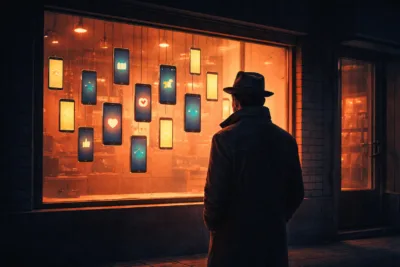
Not so long ago, it seemed that all platforms were heading in the same direction: towards more content and personalisation. Today, however, we are facing a situation that resembles a geological split. The internet is cracking into two parallel worlds, and the gap between them is widening month by month. On the one hand, there are Meta and OpenAI, which have recently launched platforms dedicated exclusively to AI-generated content. Meta’s Vibes is a feed consisting of short videos created by AI. OpenAI’s Sora has gone even further – it’s a fully-fledged social network where realistic videos are created from simple text prompts. Conversely, a resistance movement is growing. Cara is a platform for artists that bans AI content entirely. Then there’s Pixelfed, an alternative to Instagram with servers free of generative images. Spread is a network that promises access to „human ideas” and an escape from the „flood of AI slop”. DiVine, a revival of the old Vine, uses multi-layered synthetic content-detection systems and advertises itself with the slogan “No AI Slop.“ Pinterest has introduced a “tuner” that allows users to reduce the amount of AI in their feed, in response to complaints about the flood of artificial images.
But what does this actually mean? Perhaps we are witnessing the beginning of what future internet historians may call the „Great Split” – the moment when the uniform fabric of the digital public sphere started to break up into separate ecosystems with different underlying assumptions. In one of these ecosystems, the question „Did humans create it?” is a further order of question. In the other, it is the first and most important one. This brings us to a question that has accompanied humanity for centuries: Does authenticity have value in itself? Is a man-made painting any different from an identical-looking machine-generated image?
For a long time, these were abstract dilemmas. Today, however, they have become the criteria by which we choose the platform we spend hours on every day. TikTok has already flagged over 1.3 billion videos as AI-generated. Meanwhile, 55% of Generation Z say they reject brands that use artificial models in their ads, considering them inauthentic and misleading. Perhaps that’s why a split is inevitable. One social media platform cannot simultaneously accommodate those for whom AI is a tool of unlimited creativity and those for whom it pollutes the space of meanings.
Links:
- TikTok has labeled 1.3 billion clips as AI-generated: https://www.columbian.com/news/2026/jan/31/heres-help-to-dial-down-ai-slop/
- 55% of Gen Z don’t accept brands that use AI-generated models in their ads: https://sociallyin.com/gen-z-social-media-usage-statistics/
This post is part of the project “People and Algorithms in Organisations: Competences to Work in the Digital Environment” (DIGIT_People and algorithms), funded by the NAWA – Narodowa Agencja Wymiany Akademickiej (Polish National Agency for Academic Exchange).
#DIGIT_NAWA #competencies #marketing #AI