




Joanna Berlińska
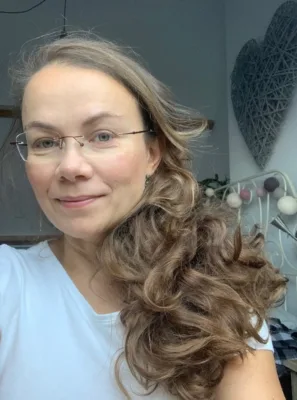
Joanna Berlińska: Graduate of International Economic Relations, specialization: European Studies. I have over twenty years of professional experience in the institutions of the European Union, with a specialization in the area of Better Regulation – an approach aimed at creating high-quality EU legislation that is evidence-based, effective, proportionate, and feasible to implement in practice.
I gained my first professional experience in the European Parliament, and then at the Directorate-General for Taxation and Customs Union, where, together with the team, I was responsible for developing institutional capacity in the field of Better Regulation. I currently work in the Secretariat-General of the European Commission. In my interdisciplinary role, I support work related to impact assessments of new legislative initiatives, evaluations and reviews of existing law, public consultations, and regulatory simplification – particularly in the area of the broadly understood digital transformation, communication networks, content, and technology. I was also the main coordinator of the work of the Fit for Future Platform, established under the Regulatory Fitness and Performance program.
1. The most breakthrough moment in your career?
An internship in the European Parliament in the year of Poland’s accession to the European Union. That moment was the beginning of a dream professional path. The internship, and later work in the Economic and Monetary Affairs Committee (ECON) of the European Parliament, allowed me for the first time to closely observe legislative processes and the shaping of EU policies. It also marked the beginning of a fascinating journey of acquiring intercultural competences and working in multilingual teams.
2. The greatest professional success?
Building from scratch the organizational capacity of the Directorate-General for Taxation and Customs Union, including structures and working methods serving the effective implementation and monitoring of tax and customs policies. Together with the team, we implemented new project management methods from the Better Regulation perspective, improved the flow of internal and external information, and ensured the integration of analytical, communication, and support functions.
3. If you could go back to the starting point, but with all the knowledge and experience you have now, what would you do differently?
I would become a carpenter and/or furniture designer – with a European hobby, of course.
More seriously, if the starting point is the beginning of work in the EU institutions, I would have a much greater distance to the work I do, resulting from a much better understanding of the political conditions that guide our work.
4. The recipe for success. How to achieve it? What to focus on? What to avoid? What advice and which competences gained during your studies at UEP turned out to be the most important?
That’s a difficult question, because success doesn’t have a single definition. For me, it’s more a state of internal satisfaction with what one does – rather than a spectacular title or position. And lately, also a balanced relationship between professional and private life. If we understand success as the realization of professional dreams, then its foundation is certainly: courage, determination, and – perhaps surprisingly – also humility.
Dreams do not come true by themselves. One has to work for them – often for years – gaining new competences and combining theoretical knowledge with practice. Success does not come from a single spectacular decision, but from consistency in everyday choices. And life wisdom comes even later!
What to avoid?
Above all, the belief that you already know everything. The world is changing, and with it, the tools, contexts, and challenges are changing. Nevertheless, awareness of one’s own value and strengths will help knock on the right doors.
From my studies at UEP, I gained solid knowledge about the European Union, with an economic foundation: analytical basics, economic thinking, and the ability to understand complex systems in a practical way.
5. What advice would you give to current students who are at the beginning of their careers?
At the beginning of your career, you don’t have to know everything – but it’s worth being open, proactive, hardworking, and focused on development. Every experience – even one that seems insignificant (right after university I answered phones at a reception desk, but in an international environment) – may one day turn out to be crucial.
It’s worth going one step beyond what is required, not settling for the minimum. Finally, something that comes with age and experience: don’t wait for the “perfect moment” – a breakthrough, in any area of life, only becomes a breakthrough from the perspective of time and the change we have created. Carpe diem.