
How Can AI Avoid Averaging Out Emotions? A New Sentiment Analysis Method Combining Language Models and Graph Neural Networks
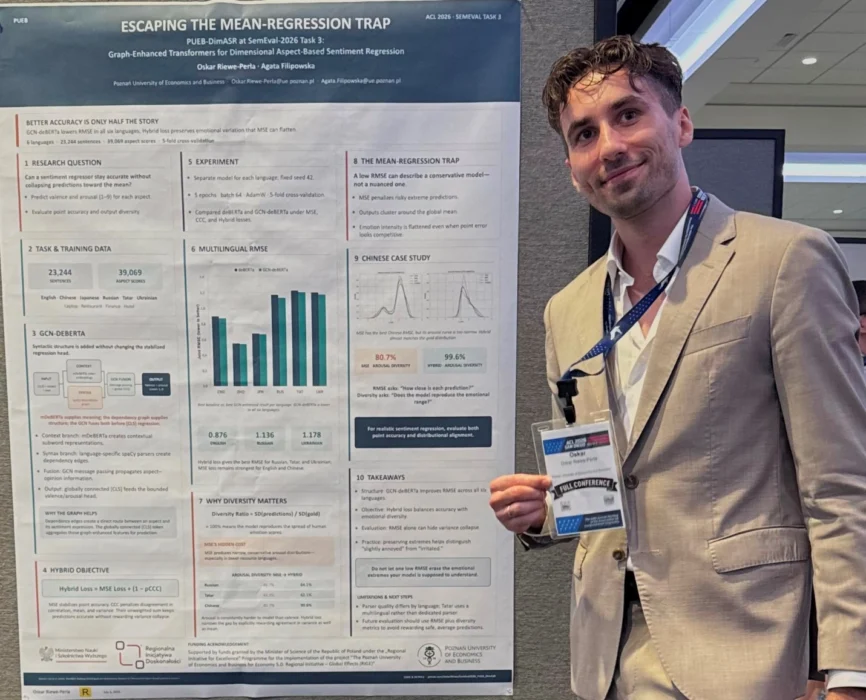
The research focused on multilingual sentiment analysis using continuous numerical scales to measure valence (how positive or negative an emotion is) and arousal (its intensity). The team addressed the so-called “mean-regression trap”, a phenomenon in which AI models tend to predict values close to the average, thereby underestimating strong emotions and reducing the diversity of predicted emotional responses. To overcome this limitation, the researchers combined the DeBERTa language model with graph convolutional networks (GCNs), which capture grammatical relationships between words, and introduced a hybrid loss function combining Mean Squared Error (MSE) and the Concordance Correlation Coefficient (CCC).
Experiments involving more than 39,000 annotations across six languages (English, Chinese, Japanese, Russian, Tatar, and Ukrainian) demonstrated that the proposed approach improves prediction accuracy compared with the baseline model while better preserving the natural variation in emotional responses. The method could also have important applications in early warning systems designed to detect emerging crises.
The study was authored by Oskar Riewe-Perła and Prof. Agata Filipowska. The full paper is available through the ACL Anthology. DOI: 10.18653/v1/2026.semeval-1.53
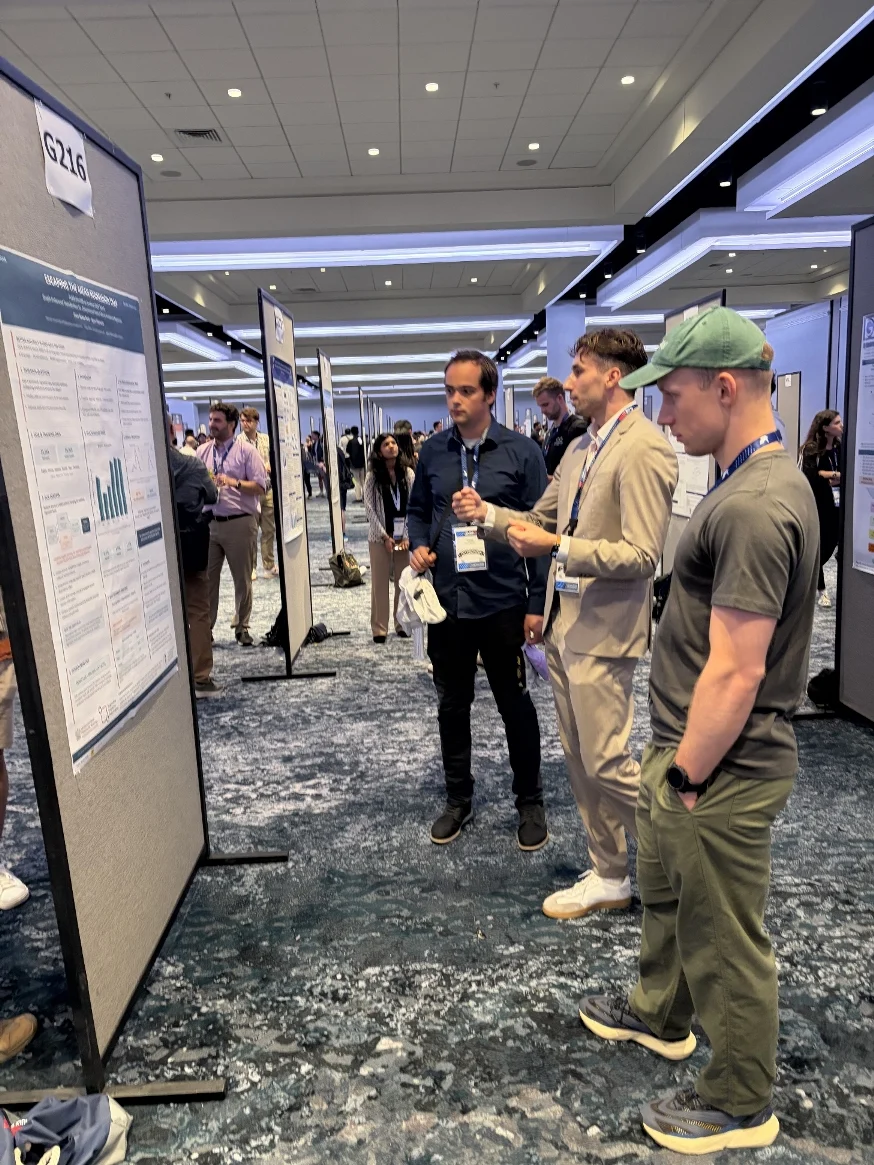
ACL 2026 (the 64th Annual Meeting of the Association for Computational Linguistics) took place on July 2–7, 2026, in San Diego, USA. It is one of the world’s leading international scientific conferences dedicated to natural language processing and computational linguistics, bringing together researchers from around the globe.
Photos from the ACL 2026 Conference