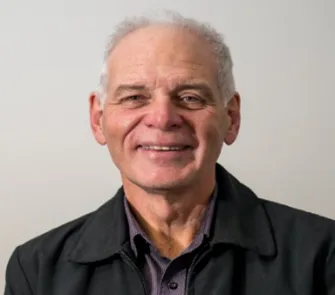


Rector of the Poznań University of Economics and Business
prof. dr hab. Barbara Jankowska
PUEB Horizons. A Doctoral Conference for Innovative Research
Theme: Innovating Business and Economic Research
Target audience: PhD students
Fee: Free of charge
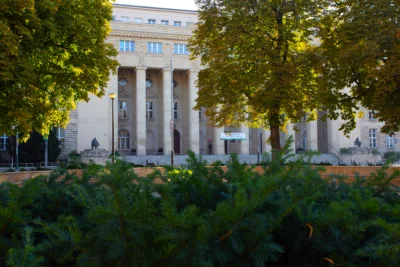
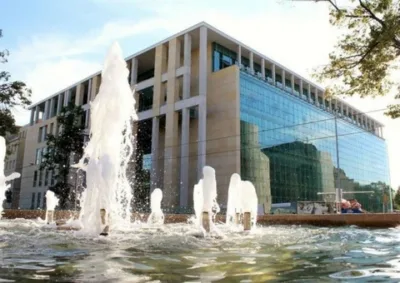
Venue: Poznań University of Economics and Business
Submissions: 10th February – 10th April
-
Conference Overview
The PUEB Horizons. A Doctoral Conference for Innovative Research aims to celebrate doctoral research excellence and collaboration across Europe and to promote doctoral education supporting the initiatives such as the European Doctoral Day launched by the French Ministry of Research.
It will provide an inclusive, high-quality academic platform for PhD candidates to present research, receive constructive feedback, participate in several research-oriented workshops and build international academic networks. The conference encourages interdisciplinary dialogue and innovative approaches to contemporary business and economic challenges.
The event will feature:
- regular (oral) presentations (business, economics, finance, quality studies)
- poster session (business, economics, finance, quality studies)
- workshops and seminars (open to PhD candidates across all scientific disciplines)
- 3-Minute Thesis Competition – 3MTC (open to all PhD candidates)
- keynote addresses by Professor Robert Faff and Professor Theocharis Grigoriadis
Conference TopicsSubmissions for regular presentations and poster session cover all areas of:
- business
- economics
- finance
- quality studies
- interdisciplinary areas including policy-oriented and impact-driven research
-
Robert Faff

Robert Faff (FASSA, 2021-24) is Research Professor at Corvinus University of Budapest, Emeritus Professor at the University of Queensland and Honorary Adjunct Professor at Bond University. He has an international reputation in empirical finance research: 15 Australian Research Council grants (funding $4 million+); 370+ refereed journal publications – 50 x A* (ABDC); career citations 25,000+, with a h-index of 79 (Google Scholar). His particular passion is nurturing the career trajectories of early career researchers. Robert has supervised almost 50 PhD students to successful completion. Building on a 40-year+ academic career, his signature focus is “Pitching Research”, with worldwide penetration signalled by: (a) > 30,000 SSRN downloads; (b) > 400 pitching talks/events; (c) at 37 Australian universities; (d) spanning 54 different countries. Further, he is the Founder & President of the InSPiR2eS research network [https://pitchingresearch.com/inspir2es-network/] and creator of the InSPiR2eS Centre for Responsible Science. In addition, Robert is current Editor-in-Chief of Pacific-Basin Finance Journal; formerly: Editor of Accounting and Finance (2002-2011).
Theocharis N. Grigoriadis
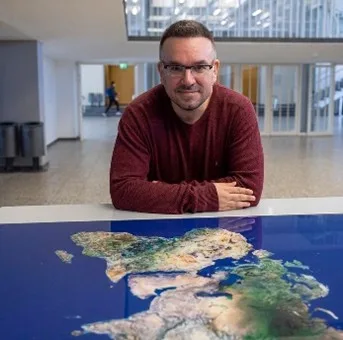
Theocharis N. Grigoriadis is Professor of Economics at the Department of Economics and the Institute for East European Studies at Freie Universität Berlin. His work combines political economy, economic history and comparative development, with a focus on Russia, Eastern Europe, the Middle East and Central Asia.
He holds doctorates in Political Science (Political Economy) from the University of California, Berkeley, and in Economics (World Economy) from Saint Petersburg State University, as well as law degrees from the University of Athens and a Master’s in Russian and East European Studies from Yale University.
Grigoriadis has published widely on empires, religion and development, and the long-run effects of institutions. His books include Religion & Comparative Development: The Genesis of Democracy & Dictatorship (Edward Elgar, 2018) and Aid in Transition: EU Development Cooperation with Russia & Eurasia (Springer, 2016), alongside recent articles in the Economic History Review, the Journal of Economic History and the European Economic Review.
He has led international teaching and research partnerships funded by the DFG, DAAD, the European Commission and private foundations, building double-degree programs and exchange networks that link Berlin with Belgrade, Tashkent, Tbilisi, Seoul and other academic hubs.
Fluent in Greek, English, German, French, Russian, Ukrainian and several regional languages, Grigoriadis brings a comparative, archive-based and data-driven approach to the study of capitalism, state-building and energy transitions across Eurasia. He regularly advises international organizations on questions of energy security, regional development and post-war reconstruction in Eastern Europe and the wider Middle East.
-
Submission and registration
- Eligible authors: At least one author must be a PhD student
- Submission form – regular presentations and poster session:
- full paper (preferred): up to 10,000 words
- or extended abstract: 1,000–1,500 words (more details in Criteria for Extended Abstract section)
- Submission form – 3MT competition:
- one static slide (.pptx or .pdf) summarizing the research
- and a brief summary (maximum 1 page) explaining the research and its significance (more details 3MT Competition section)
- Language: English
- Submissions start: 10th February 2026
- Submissions end: Extended deadline – 10th April 2026
- Submission system: https://puebhorizons2026.syskonf.pl/
- Acceptance decisions: by 10th April
Registration: 13th April – 10th May
-
Day 1 (1st June 2026)
8:00 Registration open
9:00 – 9:15 Opening (PUEB Main Auditorium)
9:15 – 10:15 Keynote Address:
Responsible use of genAI in research
Prof. R. Faff, Corvinus University of Budapest
10:15 – 10:30 Coffee break
10.30 – 12:00 Presentations (Paralell sessions # 01)
10.30 – 12:00 Thematic workshops [2] – PART 1
Thematic workshop #1
Dr I. Asanov (Kassel University) – Field experiments in economics (online)
Syllabus page for the course: https://www.igorasanov.com/sfe.html
Thematic workshop #2
Prof. A. Szymkowiak (PUEB) – SEM in Management Research – advanced level (on-site)
12:00 – 13:00 Lunch break
13:00 – 14:00 Keynote Address:
The Mobility of Nations: Refugees, Migrants & Polarization in the Long 20th Century
Prof. Theocharis Grigoriadis, Free University of Berlin
14:15 – 15.45 Presentations (Paralell sessions # 02)
14:15 – 15.45 Thematic workshops [2] – PART 2
15:45 – 16:00 Coffee break
16:00 – 17.30 Presentations (Paralell sessions # 03)
16:00 – 17.30 Thematic workshops [2] – PART 3
18:00 – 21:00 Social event and best paper award ceremony
Day 2 (2nd June 2026)9:00 – 10:30 Workshops / seminars
Open Workshop #1 (9:00 – 10:30)
Prof. R. Faff – Pitching Research (on-site)
10:30 – 11:00 Coffee break
11:00 – 12:00 Discussion Panel: Impact-driven research – how much are policy recommendations important?
Session chair: Prof. Katarzyna Szarzec
12:00 – 13:00 Lunch break
13:00 – 14:30 Workshops / seminars
Open Workshop #2 (PART1 – 13:00 – 14:30; PART2 15:00 – 16:30)
A. Ali Qureshi – AI-based systematic literature review (on-site)
Open Workshop #3 (14:00 – 15:30)
Kamila Kokot-Kanikuła (Elsevier) – Mendeley as a reference management software (online)
13:00 – 14:30 Competition – 3MT
13:00 – 14:30 Poster session
14:30 – 15:00 Coffee break
15:00 – 16:30 Workshops / seminars
Open Seminar (15:00 – 16:00)
C. Brudka – Research Management Plans (on-site)
Open Workshop #2 (PART2 15:00 – 16:30)
A. Ali Qureshi – AI based systematic literature review (on-site)
16:30 – 17:00 Closing session (3MT / Poster awards)
-
Structure and Formatting
The following criteria are designed to ensure that submitted works exhibit appropriate scientific depth and are ready for discussion in an international forum.
Length Limited to 1000–1500 words (excluding references and figures/tables). Language English (conference standard). Format Required document format: PDF. Elements Title, Author(s), Affiliation, Keywords (3-5), Abstract (max 250 words), JEL Classification, Introduction, Methodology, Results/Discussion, Conclusion, References. Scientific ContentTitle Must be concise, informative, and accurately reflect the paper’s content. Introduction Must clearly establish the research context, identify the research gap in the literature, and state the paper’s aim(s) and research questions (or hypotheses). Literature Review Briefly position the work within the context of key literature, highlighting its original contribution. Methodology A detailed and clear description of the methods used (research design, sample, instruments, data analysis). Should allow for replication or assessment of its adequacy. Results and Discussion Presentation of key findings (potentially using tables/figures). The discussion section must interpret the results in the context of the literature and address the research questions/hypotheses. Conclusion Summary of the main contribution and implications (practical/theoretical). Indication of limitations and directions for future research. References Must use a consistent citation style – APA 7. Must include key and current literature. ContributionOriginality The work must present new, previously unpublished findings or an original approach to an existing research problem. Stage of Research Submissions presenting preliminary or partial results of doctoral research are preferred (not just a mere outline). The work should be at a stage that allows for constructive discussion. Potential The contribution must demonstrate potential for further development and significance within the relevant academic discipline. -
Eligibility
- Open to all PhD fellows,
- does not require presenting a regular oral or poster paper,
- one entry per participant.
Presentation Requirements- Time Limit: Exactly 3 minutes (timing strictly enforced)
- Language: English only
- Format: Oral presentation with visual aid
- Slides: 1 static slide (no animations, transitions, or slide changes)
Content Guidelines- Present original research in clear English.
- Explain the research significance to a non-specialist audience.
- Provide a clear problem statement and concise description of methodology.
- Highlight key findings and implications
- Deliver the presentation engagingly and enthusiastically.
Submissions- One static slide (.pptx or .pdf) summarizing the research
- and a brief summary (maximum 1 page) explaining the research and its significance.
-
Workshops
Open Workshop #1
Prof. R. Faff – Pitching Research (on-site)
Open Workshop #2
A. Ali Qureshi – AI-based systematic literature review (on-site)
Open Workshop #3
Kamila Kokot-Kanikuła (Elsevier) – Mendeley as a reference management software (online)
Thematic workshop #1
Dr. I. Asanov (Kassel University) – Field experiments in economics (online)
Syllabus page for the course: https://www.igorasanov.com/sfe.html
Thematic workshop #2
Prof. A. Szymkowiak (PUEB) – SEM in Management Research – advanced level (on-site)
Open Seminar
C. Brudka – Research Data Management (on-site)
-
Scientific Committee
Chairman
Marcin Anholcer, Vice-Rector for Research, Poznań University of Economics and BusinessMembers
Katarzyna Szarzec, Poznań University of Economics and Business
Robert Faff, Corvinus University
Theocharis Grigoriadis, Free University of Berlin
Tomasz Jewartowski, Poznań University of Economics and Business
Lubor Lacina, Mendel University in Brno -
The honorary patronage of the conference
Contact
e-mail: horizons@konf.ue.poznan.pl